
Dental PPE Rules by Procedure: Gloves, Masks, and Face Shields
Which PPE must dental staff wear for each procedure? Glove, mask, and face shield rules under OSHA 29 CFR 1910.1030 and CDC dental guidelines, with Nevada specifics from a former NSBDE inspector.
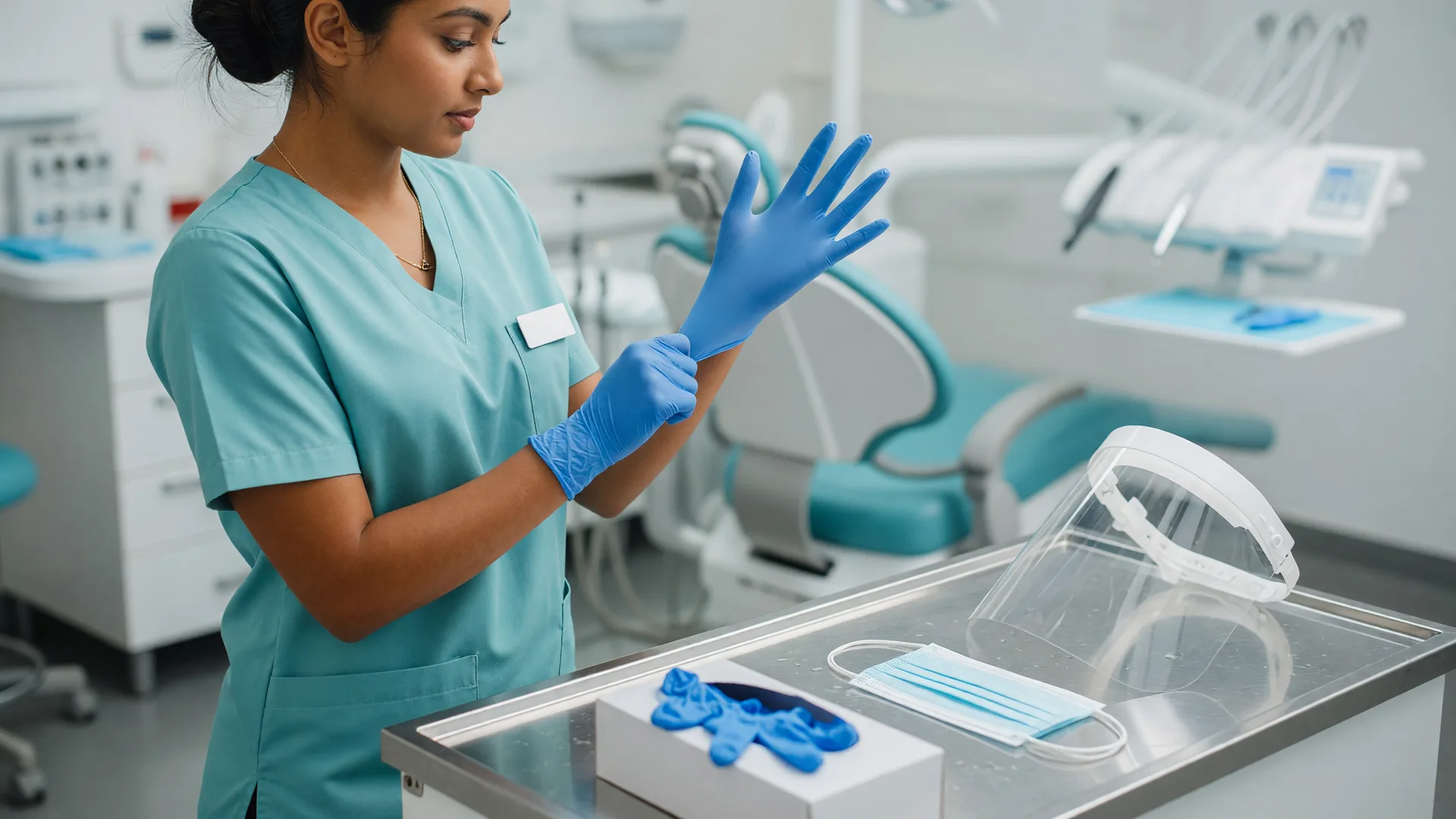
The short answer: in a Nevada dental office you wear gloves for virtually every patient contact, a mask plus eye protection with solid side shields (or a chin-length face shield) whenever a procedure can splash, spray, or spatter, and a higher level of protection, including an N95 or equivalent respirator, for aerosol-generating procedures on patients with a known or suspected airborne infection. That is the standard set by OSHA's Bloodborne Pathogens Standard (29 CFR 1910.1030), the CDC dental infection control guidelines, and, in Nevada, NAC 631.178, which adopts those CDC guidelines by reference. As a former NSBDE infection control inspector, I have seen the confusion around which PPE pairs with which procedure cause real compliance problems. Let me lay the rules out procedure by procedure so your team knows exactly what to reach for.
Why Does PPE Selection Matter for Nevada Dental Compliance?
PPE is not a suggestion, and it is not a matter of personal preference. In Nevada you answer to two separate regulators. Nevada OSHA (NVOSHA) runs its own state plan that must be at least as effective as federal OSHA, so your practice is held to 29 CFR 1910.1030 and the PPE standards in 29 CFR 1910 Subpart I (1910.132 through 1910.138). Separately, the Nevada State Board of Dental Examiners enforces infection control under NAC Chapter 631, and NAC 631.178 adopts the CDC dental infection control guidelines by reference. That means the CDC guidance is not optional reading; it is part of your Nevada dental license obligations.
The practical takeaway is that the same pair of gloves and the same surgical mask will not cover every procedure in your office. The standard hinges on what the procedure can generate. Let me walk through each category.
When Are Gloves Required, and Which Gloves Should You Use?
Under 29 CFR 1910.1030(d)(3)(ix), gloves are required whenever hand contact with blood, saliva, mucous membranes, non-intact skin, or other potentially infectious material (OPIM) is reasonably anticipated. OSHA classifies saliva in dental procedures as OPIM, so for all practical purposes gloves are required for every dental patient contact. That includes examinations, hygiene appointments, restorative work, and any task where you touch a patient's mouth or the surfaces that contact it.
Choose the right glove for the task. Use medical exam gloves for patient care, and switch to heavy-duty utility gloves for cleaning, instrument processing, and handling contaminated equipment. Sterile surgeon's gloves are appropriate for surgical procedures. Use a new pair for each patient, and change them as soon as practical if they become contaminated, torn, cut, or punctured. Remove gloves before leaving the treatment area, and never reuse a pair on a different patient. One thing inspectors check closely is whether you keep an adequate supply on hand, including both latex and latex-free options for staff with sensitivities, because NAC 631.178 and the NSBDE Infection Control Committee checklist both verify accessible PPE supplies.
When Do You Need a Mask Versus a Face Shield?
This is the question I get most often, and the answer is a combination rather than a choice. Under 29 CFR 1910.1030(d)(3)(x), masks in combination with eye protection that has solid side shields, or a chin-length face shield, must be worn whenever splashes, spray, spatter, or droplets may be generated and eye, nose, or mouth contamination can be anticipated. In practice that means nearly every operative, surgical, and hygiene procedure requires a surgical mask plus eye protection. A face shield is not a substitute for a mask on its own; use it as the eye protection layer in combination with a mask.
Change your mask between patients, and replace it during treatment if it becomes wet or soiled. Use a fresh mask for every patient. The same mask and the same face shield should never carry over from one patient to the next. When the NSBDE inspects, they are looking for correct usage, not just presence, so a box of masks sitting unused in the supply closet will not save you if your team is not actually wearing them during procedures.
What PPE Do You Need for Aerosol-Generating Procedures?
Aerosol-generating procedures raise the bar. When your high-speed handpiece, ultrasonic scaler, or air-water syringe sends fine droplets and particles into the air, the baseline surgical mask is not always enough. For patients with a known or suspected airborne transmissible disease, such as tuberculosis, the CDC recommends an N95 respirator (or equivalent) in addition to eye protection, along with a gown or protective clothing and gloves. This is a deliberate step up from the routine splash-and-spatter baseline.
Here is where many practices stumble. A respirator is not the same as a surgical mask, and it carries extra obligations. Once you use N95 respirators, you step into OSHA's Respiratory Protection standard (29 CFR 1910.134), which requires a written respiratory protection program, medical evaluation, and fit testing for each wearer. You cannot simply hand an N95 to a hygienist and call it done. If you treat patients with airborne infectious disease, plan the respirator program properly, or keep those patients referred to a setting that has one.
What Are the Most Common PPE Mistakes Inspectors See?
Over years of inspecting dental offices across southern and rural Nevada, I saw the same PPE mistakes repeat. The first is wearing the same mask all day. The second is treating a face shield as an alternative to a mask rather than as the eye protection layer in combination with it. The third is skipping eye protection entirely during hygiene and restorative work because the clinician decides there will not be splatter, even though OSHA requires it whenever contamination can be anticipated.
The fourth is the supply problem: running out of a glove size, or only stocking one glove type when the board requires both latex and latex-free options for staff with exposure risk. The fifth, and the most damaging from a documentation standpoint, is having no written PPE policy at all. Under 29 CFR 1910.132(d) you must perform and document a written PPE hazard assessment of your office, and NAC 631.178 and the NSBDE checklist verify a written PPE policy. If an inspector asks for your hazard assessment and the written policy and you cannot produce either, that is a demerit you could have avoided.
"PPE is the easiest part of infection control to get right, and the easiest to slip on. The difference between a compliant office and a citation is a written policy, an adequate supply, and a team that uses the right gear for each procedure."
How Do You Document PPE Compliance in Your Office?
Build your PPE documentation the same way you build the rest of your compliance binder. Keep your written PPE hazard assessment current and dated. Maintain training records showing every clinical and clinical-adjacent team member received bloodborne pathogens training under 29 CFR 1910.1030, including how and when to use each piece of PPE. Keep a record of your annual review of the written exposure control plan, which must reflect your current staff and procedures. If you use respirators, keep your fit testing and medical evaluation records in a separate, protected file.
If you would rather not build this from scratch, our team builds custom compliance manuals that include a written PPE policy and hazard assessment template ready for your office. We also run staff training sessions that cover donning and doffing order, procedure-by-procedure PPE selection, and the documentation inspectors expect. And if you want a full picture of where your practice stands, a self-audit using our compliance checklist is a smart place to start, or you can schedule a professional audit.
How Should Your Team Decide What to Wear, Procedure by Procedure?
Here is a simple rule of thumb your team can post in the treatment area. For any patient contact, gloves. For any procedure that can splash, spray, or spatter, add a surgical mask and eye protection with solid side shields or a face shield. For aerosol-generating procedures on a patient with a known or suspected airborne infection, move up to an N95 respirator plus eye protection, a gown, and gloves. When in doubt, escalate rather than downgrade, because the lower level of protection is what creates risk for your team and your license.
PPE compliance protects your people, your patients, and your practice. It is the front line of infection control, and it is fully within your control. If you want an inspector's eye on your current setup, our team can review your PPE policy, your supplies, and your documentation as part of an infection control audit. Get the gear right, document it, and train your team, and PPE becomes one less thing to worry about when the board walks through your door.
Need a PPE and Infection Control Review?
Let a former NSBDE inspector review your PPE policy, supplies, and documentation before your next inspection.
Schedule a Review