
Record-Keeping for Infection Control: What the Board Actually Looks For
As a former NSBDE inspector, I know exactly what records dental boards and OSHA want to see. Here is what Nevada dental practices must have on file.
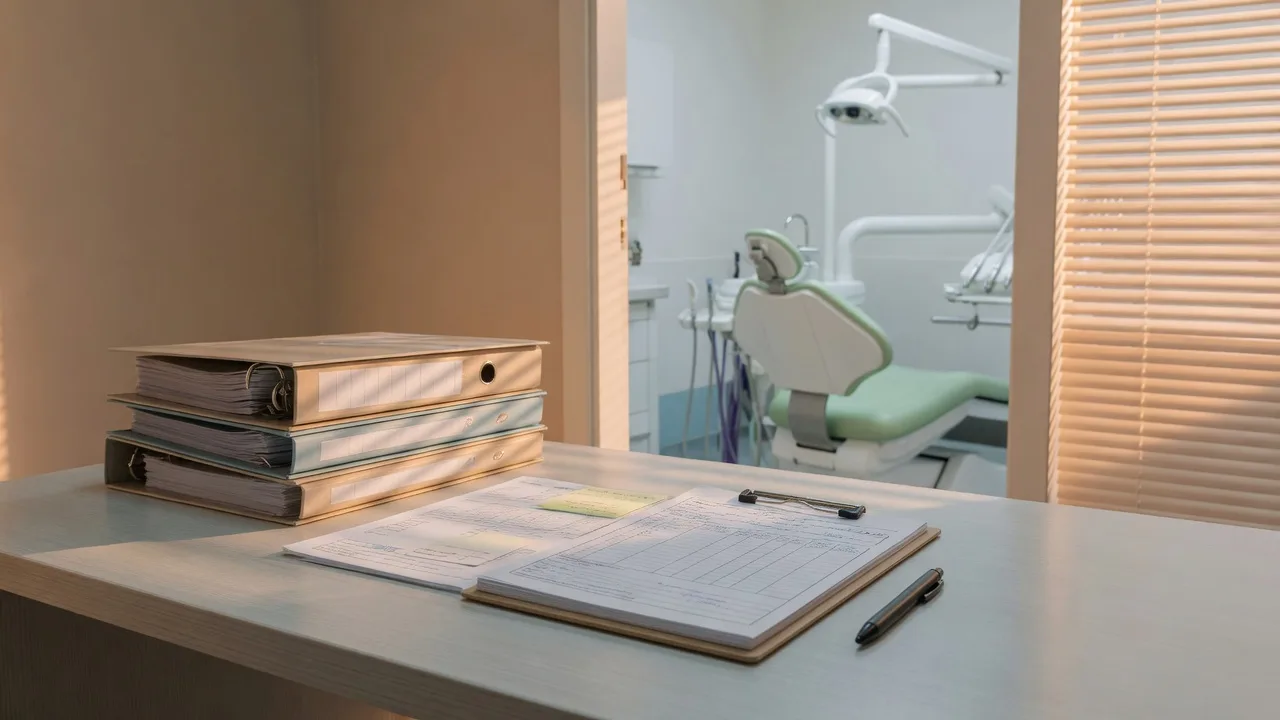
Nevada dental practices must maintain at least seven distinct categories of infection control records to satisfy both the Nevada State Board of Dental Examiners (NSBDE) and OSHA. After inspecting dozens of dental offices across southern and rural Nevada as a former NSBDE infection control inspector, I can tell you exactly what the board looks for when they walk in. The answer is straightforward: they want organized, complete, and current records that prove your practice is following the law. No gaps, no excuses, no "we are working on it."
Let me walk through each record category. I will tell you what the regulation says, what the inspector actually checks, and where most practices fall short.
What Spore Testing Records Does the Board Actually Want to See?
Under NAC 631.178, every dental office in Nevada must perform weekly biological spore testing on every sterilizer in use. The rule requires you to use biological indicators (spore strips or ampoules) from the same lot as your control indicator, and to keep a dated log of every test result. Chemical indicators must be present inside every instrument pack, and mechanical monitoring (time, temperature, pressure) must be recorded for every load.
Here is what the inspector does: they ask for your spore testing log, then pick a random date three months ago. If you cannot produce the matching record in under a minute, that is a red flag. If your log shows tests every week but you skipped a month and backdated the entries, we can see the gap in the chemical indicator lot numbers. If you have a second autoclave in a hygiene room that is not in the log at all, that is a separate violation.
Keep your spore test records in a single binder organized by month, with the matching control results and the manufacturer's instructions for each biological indicator on file. Date every entry the day the test is run, not the day you remember to write it down.
What Happens When a Spore Test Fails, and How Do You Document It?
A failed spore test is not a disaster. It is a problem if you have no record of what happened next. NAC 631.178 requires you to document the corrective action taken and the retest result. That means you write down: the date of the failure, the sterilizer involved, what you did (repeated the cycle, called the manufacturer, switched to a different sterilizer while waiting for repair), and the date of the successful retest.
I have seen practices with three failed spore tests in a row and no documentation at all. That is not a sterilization problem. That is a record-keeping problem, and the board treats it as seriously as the original failure. Every spore test failure needs a paper trail that shows you investigated and resolved it.
What Employee Training Records Must You Keep for Infection Control?
NAC 631.045 requires that for every non-licensed employee who assists with infection control procedures, you keep their name, address, start date, and a signed statement confirming they received adequate instruction on infection control procedures and are qualified to operate sterilization equipment. This is not a suggestion. It is a license renewal requirement, and the board checks it.
On the OSHA side, 29 CFR 1910.1030 requires training records that include the dates of training, a summary of the content, the name and qualifications of the trainer, and the names and job titles of all attendees. These records must be kept for at least three years. Every single clinical and clinical-adjacent staff member must have documented annual bloodborne pathogens training, and that training must cover the specific procedures they perform in your office.
Most practices we audit have training records for the dentist and hygienists but nothing for the dental assistants or the front desk staff who handle contaminated instruments. In Nevada, every team member who enters a treatment room or touches a contaminated surface needs documented training. If you use a temp or a new hire, document their training on day one, not the week before the board shows up.
What Does a Complete Exposure Control Plan Look Like?
OSHA's Bloodborne Pathogens Standard (29 CFR 1910.1030) requires a written exposure control plan that is reviewed and updated at least annually. The plan must reflect your current staff, current procedures, and current equipment. It must include your hepatitis B vaccination policy, your post-exposure evaluation procedures, and your safer needle device evaluation documentation.
Here is the part most Nevada offices miss: the annual review must be documented. If you have a plan from 2022 with the same staff list and the same procedures, an inspector will ask when you last reviewed it. If you cannot show a dated signature or a meeting note, the plan is not current. The same goes for your safer needle device review. OSHA requires you to document an annual evaluation of available engineering controls and to solicit input from non-managerial employees who use sharps. That documentation needs to be in the file.
We build custom compliance manuals for Nevada practices that include a dated annual review page and a template for the safer needle device evaluation. If your plan is gathering dust, let us help you bring it current.
What Are the Most Overlooked Records in Nevada Dental Offices?
There are three records that consistently trip up practices during inspections. The first is the sharps injury log. OSHA requires a log that protects employee confidentiality and is kept for five years. Many offices have no log at all, or they record injuries on a scrap of paper in a drawer. Use a sharps injury log that meets OSHA's requirements and keep it with your other exposure control documents.
The second is the hepatitis B vaccination declination form. If an employee declines the vaccine, OSHA requires a signed declination form (the specific language is in Appendix A of 29 CFR 1910.1030). I have walked into offices where half the staff declined the vaccine but there is not a single signed form in the file. If you cannot produce the declination, the inspector assumes you never offered it.
The third is the annual hazard communication training record. Under 29 CFR 1910.1200, every employee who may be exposed to hazardous chemicals in your practice must have documented training on the chemicals they work with, the safety data sheets, and the labeling system. This training must be documented and kept for three years. If your team uses disinfectants, sterilants, or any chemical in the operatory, they need this training on file.
How Does Nevada's Dual Regulatory System Affect Your Record Keeping?
Nevada dental offices face a unique challenge: the NSBDE inspects for infection control compliance under NAC Chapter 631, and Nevada OSHA (NVOSHA) inspects for workplace safety under federal standards adopted by the state. These are separate agencies with separate inspection teams and separate record requirements. A clean NSBDE inspection does not protect you from a NVOSHA inspection, and vice versa.
Your record-keeping system needs to satisfy both. I recommend keeping a dedicated compliance binder with clearly labeled sections for NSBDE-required records (spore testing logs, employee infection control statements, CE certificates) and OSHA-required records (training documentation, exposure control plan, sharps injury log, hazard communication records). When the inspector asks for a specific document, you should be able to hand it to them without shuffling through a stack of unrelated papers.
"The best record-keeping system is the one that makes it easy to find what the inspector asks for, not the one that looks good in a binder on a shelf."
How Often Should You Review Your Infection Control Records?
Set a quarterly review date. Every three months, pull your compliance binder, check that your spore testing log is current, confirm that your training records are up to date, and verify that your exposure control plan still reflects your current practice. If you hired a new team member, added a new procedure, or changed a piece of equipment, update the relevant documents immediately. Do not wait for the annual review.
I also recommend doing a self-audit once a year. Walk through the sterilization room, check the autoclave log, review the training file, and make sure everything is in order. You can do this yourself, or you can schedule a professional audit with our team. For practices that prefer a structured approach, we offer staff training sessions that include record-keeping best practices.
The bottom line is simple: Nevada's dental board and OSHA both expect your records to be complete, current, and organized. If you have gaps, fix them now. If you are not sure what you are missing, that is what we are here for. Samantha brings 16 years of clinical experience and a former inspector's eye to every audit we do, and we serve practices across Summerlin, Henderson, Northwest Las Vegas, and the entire Las Vegas Valley.
Need a Compliance Records Audit?
Let a former NSBDE inspector review your infection control records and identify gaps before your next inspection.
Schedule an Audit