OSHA Inspection Readiness: What a Dental Office Should Do 30, 60, and 90 Days Before a Visit
A practical timeline for Nevada dental practices preparing for an OSHA or NVOSHA inspection, with specific action items, required documents, and common pitfalls to avoid.
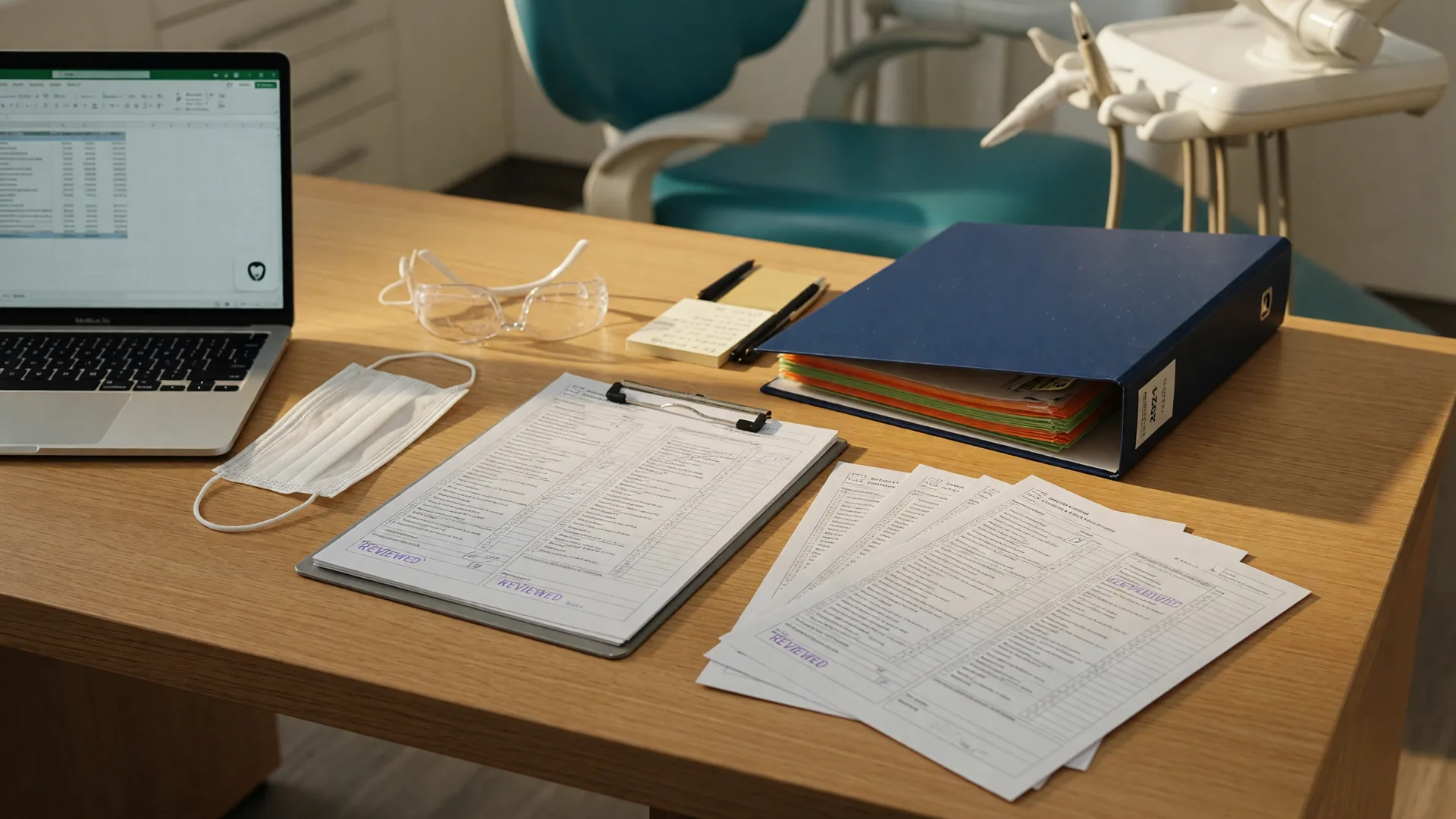
Preparing for an OSHA inspection does not need to be overwhelming, but it does require a systematic approach. If you operate a dental practice in Nevada, you face inspection from both Nevada OSHA (NVOSHA) and the Nevada State Board of Dental Examiners (NSBDE), and each agency has the authority to walk through your door. The most effective strategy is a structured three-phase timeline: 90 days out, 60 days out, and 30 days out. Here is exactly what to do at each stage so you are ready when they arrive.
I served as an NSBDE infection control inspector for dental offices across southern and rural Nevada, and I have seen every version of not ready. I have walked into practices where the exposure control plan was three years out of date, where the training records did not exist, and where the sharps injury log was a sticky note by the sterilization sink. Every single one of those could have been fixed with a timeline like this one. Let me walk you through it.
What Should You Do 90 Days Before an OSHA Inspection?
Ninety days is the document phase. This is where you check every piece of paper your practice is required to keep, and you give yourself enough time to fix anything that is missing or expired. Do not skip this phase. The documents are the foundation of every inspection, and if your paperwork is clean, the rest of the inspection goes much smoother.
Start with your written exposure control plan under 29 CFR 1910.1030. This is the single most important document in your compliance file. It must be practice-specific, dated, and reviewed within the last 12 months. It needs to list every job classification with occupational exposure, describe the engineering controls and work practice controls you use, include your hepatitis B vaccination policy, and document your annual safer needle device evaluation. If you reviewed it 13 months ago, it is not current. Fix that now.
Next, check your hazard communication program under 29 CFR 1910.1200. You need a written plan that covers how your practice manages hazardous chemicals, maintains safety data sheets, labels secondary containers, and trains employees. Is your SDS binder complete? Do you have an SDS for every chemical in the practice, including the surface disinfectant, the ultrasonic cleaning solution, and the sterilant? If you switched brands six months ago and did not update the binder, that is a gap.
Pull your sharps injury log and verify it covers at least the last five years per OSHA requirements. If you have no log at all, or if it only has one entry from 2022 with no follow-up documentation, that is a problem. Every percutaneous injury from a contaminated sharp must be logged with the date, the type and brand of device involved, the department or work area, and a brief description of how the incident occurred. Employee confidentiality must be protected.
Finally, verify your hepatitis B vaccination records. Every employee with occupational exposure must be offered the vaccine series within 10 working days of initial assignment. For employees who accepted, you need proof of vaccination or a signed declination form with the specific language from Appendix A of 29 CFR 1910.1030. If you hired someone six months ago and they declined, you need that signed form. If you cannot find it, ask them to sign a new one today.
I recommend scheduling your annual bloodborne pathogens training during this window. Do not wait until the week before the inspection. Train your team at the 90-day mark, document it thoroughly, and the topic is done. If you want help setting up a proper compliance system, our infection control consulting services include a full document audit that covers every item on this list.
What Should You Review 60 Days Before an OSHA Inspection?
Sixty days is the physical inspection phase. At this point, your documents should be in order, and you shift focus to the clinical environment. An OSHA inspector will look at your paperwork first, but they will also walk through your treatment rooms, sterilization area, and laboratory. They will check how you handle and dispose of sharps, whether you have appropriate PPE available, and whether your team is actually following the procedures you wrote down in your exposure control plan.
Walk every treatment room and your sterilization area with a critical eye. Are your sharps containers mounted securely and not overfilled? Are they located as close as feasible to the point of use? OSHA requires that sharps disposal containers be easily accessible and maintained in accordance with 29 CFR 1910.1030(d)(4)(iii)(A). If an assistant has to walk across the room to dispose of a needle, that is a violation waiting to happen.
Check your PPE supplies. Do you have enough gloves, masks, face shields, and protective eyewear in the right sizes for every team member? The National Institute for Occupational Safety and Health and OSHA both emphasize that PPE must be readily accessible and properly fitted. For procedures that generate splashes or sprays of blood or saliva, you need a surgical mask and protective eyewear or a face shield. For procedures that generate aerosols, a higher level of respiratory protection may be appropriate.
Verify your sterilization monitoring records are complete. This includes weekly biological spore testing (required under NAC 631.178 for Nevada dental practices), chemical indicator monitoring for every pack, and mechanical monitoring records for every load. Pull the log and check for gaps. If you find a week with no entry, document the gap and start running weekly tests consistently from today. The inspector will notice the gap, but they will also notice that you caught it and fixed it.
Confirm that surface barriers are used properly in your treatment rooms, that reusable items are cleaned and sterilized according to manufacturer instructions, and that your ultrasonic cleaner and handpiece maintenance logs are current. All of these can be checked during an inspection, and they are all items that the NSBDE specifically looks for under NAC Chapter 631.
If you have identified gaps in your sterilization or PPE protocols during this phase, our staff training workshops can get your team up to speed on proper procedures in a single session. We train at your practice using your equipment and your workflows, so the training is immediately applicable.
What Should You Verify 30 Days Before an OSHA Inspection?
Thirty days is the final review and go-live phase. At this point you should have completed your document audit and your physical environment check. Now you run through everything one more time, do a mock inspection if possible, and make sure every team member knows their role.
Conduct a tabletop walkthrough with your office manager or lead clinician. Open your compliance binder and ask yourself the questions an inspector would ask. Let me show you what that looks like.
"Can I see your current exposure control plan? When was it last reviewed? Do you have a record of the annual review meeting?"
If you cannot produce the plan in under 30 seconds and point to a dated annual review signature, that is a red flag. An OSHA inspector will ask for it within the first five minutes of the inspection.
"Show me your sharps injury log. Have you had any exposures in the last 12 months? What was your follow-up process?"
If you have had an exposure incident and there is no documentation of the post-exposure evaluation, that is a separate violation under 29 CFR 1910.1030(f). Every exposure must have a documented evaluation and follow-up, including source testing, employee blood testing (with consent), and a written opinion from the healthcare professional.
"Let me see your training records for all clinical staff. Who conducted the training? What topics were covered?"
Training records must include the date, a summary of the content, the name and qualifications of the trainer, and the names and job titles of all attendees. I have seen records that say "annual training completed" with no trainer name and no content summary. That record will not satisfy an inspector.
I also recommend doing a brief 15-minute team huddle at the 30-day mark. Remind everyone where the compliance binder is kept, what to do if an inspector asks a question, and who on the team is the designated point of contact. Make sure every staff member knows that if they are asked a question they are not sure about, they can say "let me get the office manager" rather than guessing. Guessing wrong is worse than saying you will check.
If you want the highest level of confidence, schedule a pre-inspection audit with our team. We will walk through your practice, check every document, inspect your sterilization workflow, and give you a written report of findings with a prioritized fix list. As a former NSBDE inspector, I know exactly what both NVOSHA and the board look for, and I have helped practices across Summerlin, Henderson, and the Las Vegas Valley get inspection-ready without the last-minute panic.
What Common Items Do Dental Practices Miss During OSHA Inspections?
In my experience auditing and inspecting dental offices, these are the items that most consistently come up as deficiencies during OSHA inspections:
The missing annual review of the exposure control plan. Many practices have a plan but cannot prove they reviewed it within the last 12 months. A dated signature on the plan itself or a meeting note documenting the review is sufficient. Without it, the plan is not current.
Incomplete hazard communication. This includes missing safety data sheets, unlabeled secondary containers (spray bottles, dispensers), and no documented training on the chemicals used in the practice. Under 29 CFR 1910.1200, every employee who may be exposed to hazardous chemicals must have documented training on how to read an SDS, how to interpret labels, and the specific hazards of the chemicals they use.
PPE training documentation. Having PPE in the office is not enough. OSHA requires documented training on when and how to use each type of PPE, its limitations, and how to properly don, doff, and dispose of it. A one-time training at hire is not sufficient if the team has not had a refresher.
Respiratory protection gaps. If your practice uses N95 respirators or any filtering facepiece respirator, OSHA's Respiratory Protection Standard (29 CFR 1910.134) applies. This requires a written respiratory protection program that is practice-specific, medical evaluations for every employee who may wear a respirator, and annual fit testing. Many Nevada dental practices that started using N95s during the pandemic never established a formal program.
Documentation gaps for temporary staff. If you use a temp hygienist or assistant, their training must be documented before they start clinical work. A common assumption is that the temping agency provides training, but under OSHA, the host practice is responsible for ensuring that every employee on site has the required training for the tasks they perform.
For a complete breakdown of the record-keeping side, read our in-depth guide on record-keeping for infection control. It covers every document category that the NSBDE and OSHA look for during an inspection.
Does Nevada OSHA Operate Differently Than Federal OSHA?
Yes. Nevada operates its own state OSHA plan, NVOSHA, administered by the Nevada Division of Industrial Relations. NVOSHA must be at least as effective as federal OSHA, and in some areas Nevada's standards go further. For dental practices, this means you need to comply with both the federal standards that Nevada has adopted and any Nevada-specific requirements.
On top of that, the NSBDE enforces infection control regulations under NAC Chapter 631, including requirements for weekly spore testing, sterilizer monitoring, infection control training for non-licensed employees, and proper record keeping. The NSBDE issues demerits for violations, not citations, but accumulated demerits can put your license at risk. A NSBDE inspection does not protect you from a NVOSHA inspection, and vice versa. Both agencies have independent authority to inspect your practice, and findings from one can trigger a visit from the other.
This dual regulatory system means your compliance program needs to satisfy both agencies. The good news is that most of the systems overlap. A strong exposure control plan, complete training records, proper sterilization monitoring, and a clean clinical environment will satisfy both NVOSHA and the NSBDE. The key is being thorough and consistent across both sets of requirements.
If you are not sure where your practice stands, we can help. Samantha Medeiros brings 16 years of clinical experience together with former inspector expertise, and we serve dental practices across the entire Las Vegas Valley, from Summerlin to Henderson and Southwest Las Vegas.
The three-phase timeline works for any practice size. Start at 90 days with the documents. Move to 60 days with the physical environment. Finish at 30 days with the mock walkthrough and team huddle. Follow that sequence, and you will walk into your next inspection confident rather than worried.
Need a Pre-Inspection Audit?
Let a former NSBDE inspector review your practice using the same checklist we used during board inspections. We will identify gaps and give you a prioritized fix list.
Schedule Your Audit