Building a Compliance Culture in a Small Dental Practice
How to build a compliance culture in a small dental practice: daily habits, team training, and the paperwork that keeps a Nevada office ready for the NSBDE.
A compliance culture is what makes infection control happen even when no one is watching. In a small dental practice, that means the owner asks questions the way an inspector would, the team trains together all year instead of once a year, and the paperwork gets updated before it expires, not after a notice arrives. You do not need a compliance department to build it; you need leadership that treats compliance as part of patient care. In my years as an infection control inspector for the Nevada State Board of Dental Examiners, the practices that passed comfortably were almost never the biggest ones. They were the little three-chair offices where the hygienist checked the autoclave log every morning without being asked. Here is how you build that culture in your own practice.
Why Do Small Dental Practices Struggle With Compliance?
Small practices do not fail at compliance because their teams care less. They struggle because of structure. When you have three chairs and a team of five, one person's lapse carries a lot more weight. There is no dedicated infection control coordinator to catch the missed weekly spore test, so when the owner is in a crown seat for three hours, the log check quietly becomes optional. That is how gaps start: not with a bad decision, but with a good system no one has time to run.
The other reason is memory. In a small practice, infection control is often learned by watching whoever was there before, which means outdated habits get passed down as tradition. The NSBDE does not scale its expectations to your office size. NAC Chapter 631 applies to every dental practice in Nevada, from a one-chair studio in Henderson to a twenty-chair group in Summerlin. If your culture is built on "that is how we have always done it," you are running on luck, and luck runs out at the first inspection.
What Does a Compliance Culture Look Like Every Day?
Culture is not a poster you hang in the break room. It is a collection of small, visible, repeated behaviors. Here is what I looked for as an inspector that told me a practice had real culture, not just a binder:
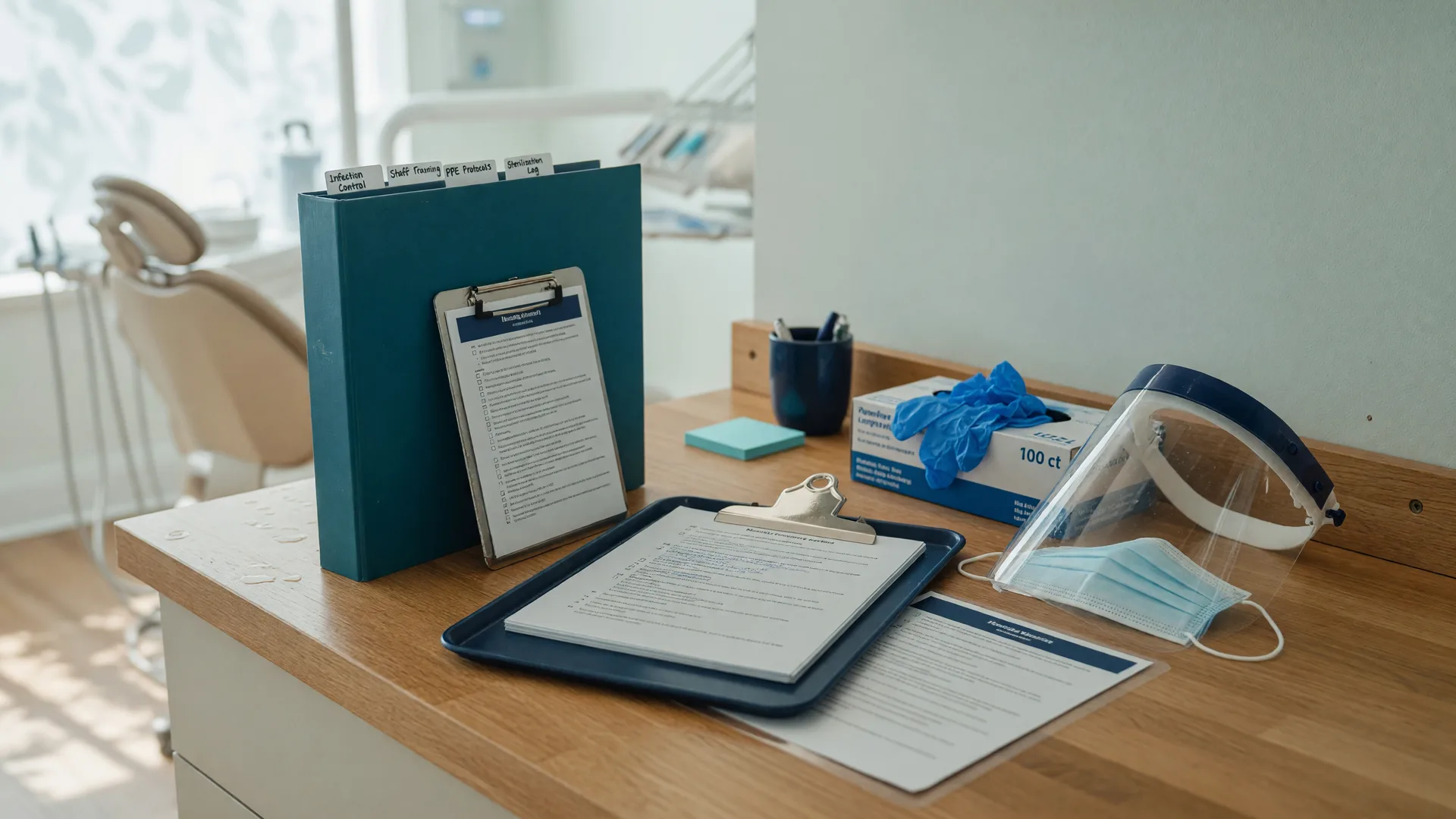
- The autoclave and spore test logs live on a clipboard at the sterilization station, not buried in a drawer, and every load has an entry.
- The weekly biological spore test is on the calendar with one named owner, because it is a Nevada requirement under NAC 631.178 and the CDC guidelines it adopts.
- PPE is stocked at the door of every treatment room in every needed size, and the team actually reaches for it.
- Sharps containers are mounted near the point of use, labeled, and replaced before they reach the fill line.
- When someone notices a gap, they say it out loud, and someone fixes it the same day.
None of that requires a big budget. It requires the owner or office manager to model it and a team that knows a quiet catch beats a surprise finding at inspection. In a small practice, the daily huddle is your most powerful culture tool. Take two minutes every morning to ask one question: "What did we almost skip yesterday, and who owns it today?" That single habit keeps compliance in front of everyone.
How Do You Train a Small Team Without Turning It Into a Chore?
The OSHA Bloodborne Pathogens Standard, 29 CFR 1910.1030(g)(2), requires training for every employee with occupational exposure at the time of initial assignment and at least once a year, at no cost and during working hours, with records kept for three years. In Nevada, dentists and dental hygienists also need infection control continuing education, currently two hours annually or four hours biennially under NAC 631.175. Most small offices treat this as a box to check once a year, and that is exactly why the habits do not stick.
Instead, split training into short, practical sessions that use your own equipment. Ten minutes on recapping rules at the sterilization station, ten minutes on the new disinfectant contact time in the supply closet, ten minutes on proper PPE removal order in an operator. When training happens at the point of use, in the language of your own workflows, it changes behavior. That is the difference between training your team and training a checklist.
If you want help building a training rhythm that actually sticks, our staff training workshops are run at your practice, using your equipment and your daily routine, so the lessons transfer directly to the treatment room.
What Paperwork Actually Drives a Compliance Culture?
Paperwork gets a bad reputation, but in a small practice the records are the culture's memory. If the exposure control plan is reviewed and signed off annually as required under 29 CFR 1910.1030(c)(1)(iv), the annual review meeting keeps compliance on the calendar. If training records are complete, you can prove at a moment's notice that every person who touches a patient was trained. If spore test results are filed in order, an auditor can see months of consistency at a glance. Documents are not bureaucracy; they are proof that the habits happened.
For the full list of what the board actually wants to see, read our guide to infection control record-keeping. And if you are starting from a blank slate, our step-by-step self-audit walks you through the entire practice, from the exposure control plan to the sterilization room, one section at a time.
How Do You Get Buy-In From a Team That Sees Compliance as Extra Work?
The fastest way to lose a small team is to make compliance feel like punishment. Nobody gets excited about a folder audit. What does get buy-in is connecting the work to what the team already cares about: patient safety and their own license. In Nevada, the board issues demerits rather than citations, and accumulated demerits can put a license at risk. That is not abstract; it is the dentist's livelihood and every clinical team member's career in the same building.
Assign each person a small area of ownership. The lead assistant owns the spore test calendar. The hygienist owns PPE stock. The front desk owns the training log. When people own a piece of the system, they protect it, and they notice when something drifts. Give credit when someone catches a gap. A visible "good catch" culture is the single most reliable sign of a practice that will stay compliant, because the team starts monitoring itself before an inspector ever walks in.
How Long Does It Take to Build a Compliance Culture?
You can change visible habits in about ninety days. Real consistency, the kind where the log is checked even on a chaotic Monday, takes about a year of repetition. The timeline matters less than the direction. Pick one system to start with: the sterilization log, the training calendar, or the exposure control plan review. Get that one running perfectly, then layer on the next. A small practice that improves one system at a time will absolutely outlast a big office that tries to fix everything in one exhausting week.
If you would rather have a former NSBDE inspector walk the practice with you and tell you exactly where to start, schedule a consultation with our team. We have helped practices across Las Vegas, Henderson, and Summerlin build the same small-practice systems, and it is gratifying every time because the fix is almost always simpler than the worry. Culture is not a big project. It is a hundred small habits, chosen on purpose, and repeated until they are just how the office works.
Compliance Culture FAQ
What is a compliance culture in a dental practice?
A compliance culture is a set of shared habits that make infection control happen automatically, even when no one is watching. It looks like an autoclave log checked every morning, PPE stocked and worn every time, and paperwork updated before it expires. It is leadership treating compliance as part of patient care instead of an obligation.
How do you get a small dental team to follow infection control rules?
Model the behavior from the top, train on your own equipment at least once a year, assign each team member a small area of ownership, and normalize catching small gaps early. Annual training at hire and yearly is required under 29 CFR 1910.1030(g)(2), and teams stay more consistent when training happens in short sessions all year instead of one lecture.
What does the NSBDE look for in a small Nevada dental practice?
The board checks sterilization monitoring including weekly biological spore testing, sharps handling and disposal, PPE use, waterline maintenance, and the training and recordkeeping required under NAC Chapter 631. The NSBDE issues demerits rather than citations, and accumulated demerits can put a license at risk, so small gaps matter even in a small practice.
How often should dental staff train on infection control?
Under 29 CFR 1910.1030(g)(2), employees with occupational exposure need training at initial assignment and at least annually, with records kept for three years. Nevada dentists and hygienists also need infection control CE, currently two hours annually or four hours biennially under NAC 631.175. Repeated practice-based training builds more reliable habits than a single yearly session.
Want to Build These Systems Faster?
Let a former NSBDE inspector look at your practice and give you a prioritized fix list. We help small Nevada practices build compliance habits that survive the daily chaos.
Schedule a Consultation