
OSHA's General Duty Clause in Dental Offices
OSHA's General Duty Clause covers dental hygiene ergonomics that no standard addresses. What Nevada practices with three hygienists should know.
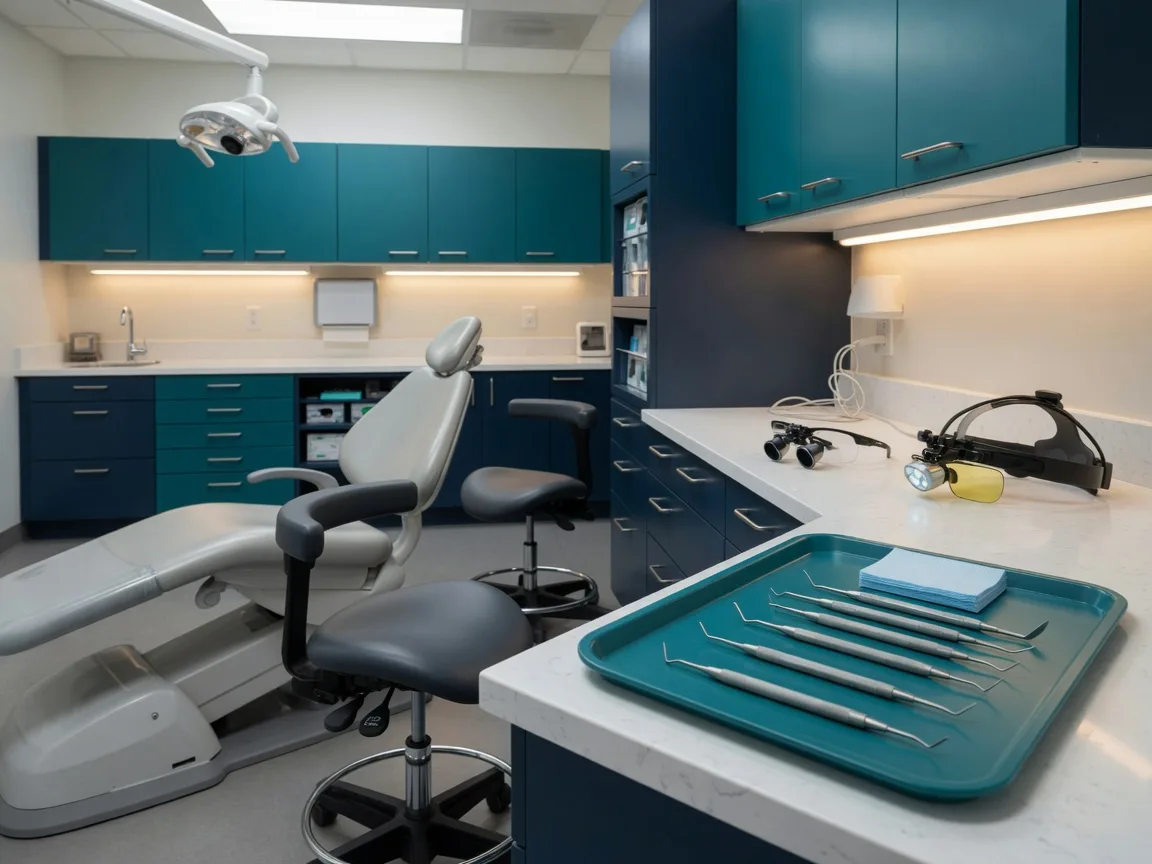
OSHA's General Duty Clause, Section 5(a)(1) of the Occupational Safety and Health Act of 1970, requires every employer to provide a workplace free from recognized hazards that are causing or are likely to cause death or serious physical harm. In a dental office it most often shows up around ergonomics, because no specific OSHA standard covers the repetitive motions and awkward postures of clinical dental work. For a Nevada practice with three dental hygienists, that means the clause applies directly to your team, and ignoring well-documented ergonomic hazards can put you in the crosshairs of an inspection. The practical answer is straightforward: your practice must identify the ergonomic hazards your hygienists face, put feasible controls like loupes, ergonomic instruments, and proper patient positioning in place, train the team, and document it all, because that documented good-faith effort is exactly what NVOSHA looks for if a complaint or injury ever triggers a visit.
I served as an NSBDE infection control inspector for dental offices across southern and rural Nevada, and I have watched great clinical teams wear themselves down at the chair. The General Duty Clause is the reason that matters to your compliance program, not just your hygienists' comfort. Let me walk you through what it is, why a three-hygienist practice is especially exposed, and what you can do about it before an inspector shows up.
What Is OSHA's General Duty Clause and When Does It Apply?
The General Duty Clause is OSHA's catch-all. It exists because no regulation can anticipate every hazard a workplace can create. When a specific standard like the Bloodborne Pathogens Standard (29 CFR 1910.1030) covers a hazard, OSHA uses that standard. When a recognized hazard has no specific standard attached, OSHA turns to the General Duty Clause instead.
To issue a citation under it, OSHA must prove four things: first, that a hazard existed and your employees were exposed to it; second, that the hazard was recognized, either by your practice, by the industry, or in published scientific literature; third, that the hazard was causing or was likely to cause death or serious physical harm; and fourth, that a feasible and effective method of abatement existed. All four must hold, which is a higher bar than a standard violation, but the clause is still used.
Ergonomics is the classic example. The federal ergonomics standard was rescinded in 2001, and Nevada has no separate ergonomics regulation, so the General Duty Clause is the enforcement path for musculoskeletal hazards in dental offices. OSHA's own dentistry guidance lists ergonomic hazards as a recognized risk for dental professionals, and the agency has cited dental employers for ergonomic musculoskeletal hazards on this basis.
Why Does the General Duty Clause Matter for a Practice With Three Dental Hygienists?
Because the more hygienists you employ doing the same repetitive clinical work, the more exposure your practice carries. A three-hygienist practice concentrates that risk in one location, under one employer, day after day. From an inspector's perspective, that is a recognized hazard with a clear, feasible fix, at a scale that is hard to miss.
The research is well documented. Dental hygienists report neck symptoms at rates ranging from roughly half to more than four in five, and shoulder symptoms are nearly as common. Carpal tunnel syndrome is recognized as an occupational health risk in dental hygienists specifically, driven by repetitive hand and wrist motions, sustained fine-motor force, and static awkward postures. When OSHA evaluates a general duty citation, published research like this is exactly what establishes that a hazard is recognized.
There is also a practical reality I saw constantly as an inspector: a hygienist who is in pain is a hygienist who modifies their technique. They lean closer, they grip harder, they rush the scaling to get out of the awkward position sooner. Those workarounds increase the strain and, in some cases, compromise the quality of care.
What Ergonomic Hazards Are "Recognized" in Dental Hygiene?
OSHA defines ergonomics as fitting workplace conditions and job demands to the capabilities of the working population, rather than forcing people to adapt to the job. In dental hygiene, the recognized hazards fall into a few categories you can spot in your own operatory.
Repetitive motion is the big one. Scaling and root planing involve the same hand and wrist movements repeated hundreds of times a day, and that repetition is a direct driver of carpal tunnel syndrome and tendonitis. Static posture is second. A hygienist holds their neck, shoulders, and arms in a fixed, often forward-leaning position for long stretches, which drives the neck and shoulder symptoms so common in the profession. Sustained fine-motor force is third, the constant grip and control required to feel the calculus through the instrument tip.
These are not vague complaints, they are documented, published hazards. That documentation is what makes them "recognized" under the General Duty Clause, and it is why an inspector can point to them with confidence.
What Would a General Duty Clause Citation Look Like in a Dental Office?
A citation would name the specific ergonomic hazard, identify the employees exposed to it, and describe the feasible abatement OSHA believes you should have taken. In a three-hygienist practice, that typically means the repetitive-motion and static-posture strain of scaling, and the abatement would be the ergonomic controls you could reasonably have put in place.
It is worth being clear about what a citation does not look like. OSHA does not cite a practice simply because a hygienist has a sore wrist, and the agency's enforcement policy says it will not focus on employers making good-faith efforts to reduce ergonomic hazards. A citation follows a pattern of ignoring a recognized hazard, not a single day of bad posture.
In Nevada, the citation would come from NVOSHA, the state plan administered by the Nevada Division of Industrial Relations, under NRS 618.375, which mirrors the federal clause. The NSBDE is a separate regulator focused on infection control under NAC Chapter 631, but the two systems are not isolated. A worker who develops a serious musculoskeletal injury can be the trigger for a complaint-based inspection, and an inspection can surface gaps that reach well beyond ergonomics.
How Can a Nevada Practice Reduce Ergonomic Risk Before an Inspection?
The good news is that the feasible abatement methods are practical and well established, and most do not require a large budget. Start with the operator position. A neutral working position, with the neck in minimal flexion, shoulders relaxed, and elbows near 90 degrees, removes most of the static-posture strain. That often comes down to positioning the patient and the chair correctly before the hygienist ever picks up an instrument.
Invest in the equipment that reduces strain. Magnification loupes let a hygienist see what they are working on without leaning forward into the patient, which is one of the simplest and most effective fixes for neck and back strain. Ergonomic hand scalers with larger, angled handles reduce grip force, and ultrasonic scalers take over much of the repetitive motion. Cordless polishers and ergonomic gloves reduce the fine-motor force on the hands and wrists.
Then build the habits that protect the team. Alternate tasks so no single hygienist does the same procedure all day. Schedule short stretching breaks between patients. Document your efforts. A written ergonomics plan that shows you assessed the hazards, chose feasible controls, and trained your team is the single strongest evidence you can offer if NVOSHA ever asks how you handled the General Duty Clause.
If you are not sure where to start, our infection control and compliance consulting includes a walkthrough of your operatory that covers the ergonomic and safety gaps alongside the infection control ones. We look at your practice the way an inspector would, and we give you a prioritized fix list before a regulator ever walks in.
Does Nevada OSHA Enforce Ergonomics Differently Than Federal OSHA?
Not in substance, but the mechanics differ. Nevada operates its own OSHA-approved state plan, NVOSHA, under the Nevada Division of Industrial Relations. Because Nevada's plan must be at least as effective as federal OSHA, and because Nevada has no separate ergonomics regulation, NVOSHA enforces ergonomic hazards in dental offices through Nevada's General Duty Clause, NRS 618.375, using the same four-element test as the federal clause.
One practical difference is that Nevada dental practices are typically treated as low-hazard workplaces and are most often inspected in response to a complaint, a referral, or a serious incident. That cuts both ways. It means a practice that is doing the right thing is unlikely to be inspected at random, but it also means the inspections that do happen tend to follow a specific trigger, often a worker injury or complaint, which is exactly the scenario where an ergonomic issue becomes the reason for the visit.
There is also a resource most practices overlook. Nevada's Division of Industrial Relations runs a voluntary consultation program through its Safety Consultation and Training Section, which can review your workplace at no charge and help you identify hazards before they become citations. It is separate from enforcement, and using it is a strong signal of good-faith effort under the General Duty Clause. For a three-hygienist practice, it is a low-cost way to get an outside set of eyes on your ergonomics. For the document side, our record-keeping guide covers the records the board and OSHA expect, and our step-by-step self-audit shows you where to begin.
What Should a Practice Do If It Receives a General Duty Clause Citation?
Do not panic, and do not ignore it. A General Duty Clause citation comes with a fixed timeline to respond, and how you respond matters as much as the citation itself. Review the citation carefully, confirm whether the four elements actually apply to your practice, and document the abatement steps you take. If you genuinely disagree with the citation, there is a formal contest process, but the fastest path to resolution is usually to correct the hazard and document the correction.
The bigger lesson is preventive. The General Duty Clause exists to catch the hazards that fall between the specific standards. A practice that assesses its ergonomic risks, puts feasible controls in place, trains its team, and documents all of it is doing exactly what the clause asks. That is not a legal strategy, it is simply good practice management, and it happens to be the same approach that keeps an office ready for the NSBDE and NVOSHA alike.
If you would like a second set of eyes on your practice, reach out to our team. As a former NSBDE inspector, I have spent years looking at Nevada dental offices through the regulator's lens, and I now use that same lens to help practices get ahead of the issues before they become citations. Your hygienists' health and your compliance program are the same investment, and it is one worth making.
Need a Compliance and Ergonomics Review?
Let a former NSBDE inspector walk through your operatory and identify the ergonomic and compliance gaps before a regulator does.
Schedule Your Review